Hand & Wrist Pain

Hand and Wrist Pain: Causes, Symptoms and Treatment Options

Written and medically reviewed by Dr Dinesh Sirisena
Consultant in Sports, Exercise & Musculoskeletal Medicine
Triaxis Sports & Joint Clinic

Hand and wrist pain may arise from the joints, bones, tendons, ligaments, muscles or nerves that support gripping and fine hand movement. Symptoms can develop after an injury or gradually through repetitive work, sport or age-related changes. Many conditions begin with non-surgical management. Following clinical assessment, options may include education, activity modification, rehabilitation, splinting and selected procedures where appropriate.

Hand and Wrist Pain

Key Points at a Glance

  • Hand and wrist pain may develop suddenly after an injury or gradually through repeated use.
  • Pain location can help identify whether a joint, tendon, ligament or nerve may be involved.
  • Common symptoms include aching, stiffness, swelling, weakness, tingling and reduced grip.
  • Computer work, manual tasks, racquet sports and weight training may aggravate symptoms.
  • Not everyone requires an X-ray, MRI or ultrasound scan.
  • Many conditions begin with activity modification and rehabilitation.
  • Significant trauma, deformity, persistent numbness or loss of function requires medical assessment.
  • Treatment decisions depend on the diagnosis rather than pain location alone.

What is hand and wrist pain?

Hand and wrist pain refers to discomfort arising from the many bones, joints, tendons, ligaments, muscles and nerves that support hand movement. Because these structures work closely together, similar symptoms can arise from different conditions and may require a clinical assessment to identify the likely source.

The wrist connects the forearm to the hand and contains eight small carpal bones arranged in two rows. The radius and ulna of the forearm meet these bones around the wrist, while ligaments help maintain alignment and stability.

Tendons cross the wrist to move the thumb and fingers. In addition, several nerves travel through narrow spaces to provide sensation and muscle control.

As a result, even a small injury or change in one structure may affect gripping, typing, lifting, writing or sporting activities.

Hand Wrist Anatomy

What does hand and wrist pain feel like?

Hand and wrist pain may feel aching, sharp, burning or stiff. Depending on the underlying condition, people may also notice swelling, clicking, reduced grip strength, numbness, tingling or difficulty moving the wrist, thumb or fingers.

Common symptoms include:

  • Pain when gripping
  • Discomfort while lifting objects
  • Wrist stiffness
  • Swelling
  • Clicking or catching
  • Reduced grip strength
  • Thumb pain
  • Finger pain
  • Tingling or numbness
  • Pain during typing
  • Symptoms during sport
  • Difficulty opening jars or turning keys

Symptoms may appear only during a specific movement. However, some conditions can also cause discomfort at rest or during sleep.

Where is hand and wrist pain usually felt?

The position of the pain may provide useful information. Symptoms can occur on the thumb side, little-finger side, back or palm side of the wrist, within the fingers or around the base of the thumb. However, pain location alone cannot confirm the diagnosis.

Thumb side of the wrist

Pain near the base of the thumb may involve the thumb tendons, nearby joints or the scaphoid bone.

Little-finger side of the wrist

Pain on this side may involve the triangular fibrocartilage complex, tendons, ligaments or the distal radioulnar joint.

Back of the wrist

Pain at the back may relate to a ganglion cyst, joint irritation, tendon conditions or ligament injuries.

Palm side of the wrist

Symptoms in this region may involve flexor tendons, joints or nerves passing into the hand.

Fingers and thumb

Pain may arise from tendon conditions, joint changes, ligament injuries or trauma.

Why does my wrist hurt when I grip or lift something?

Gripping and lifting place force through the wrist tendons, joints and ligaments. Pain during these activities may arise from tendon overload, a wrist sprain, joint irritation or a condition affecting the thumb or forearm. The movement involved and exact pain location help guide clinical assessment.

Examples of aggravating activities include:

  • Carrying shopping bags
  • Lifting gym weights
  • Using tools
  • Opening a jar
  • Playing tennis or badminton
  • Holding a golf club
  • Lifting a child
  • Pushing up from a chair

A sudden increase in workload may contribute even without one clear injury.

What causes hand and wrist pain?

Hand and wrist pain has many possible causes, including sprains, fractures, tendon conditions, nerve compression, arthritis and repetitive loading. Some symptoms begin after trauma, while others develop gradually through work, sport or daily activities.

Common causes include:

Wrist sprain

A sprain occurs when a wrist ligament stretches beyond its usual range or tears. Falls onto an outstretched hand are a common cause.

Fracture

A fall or direct impact may fracture one of the wrist or hand bones. Some fractures cause immediate swelling and loss of movement, while others may initially appear less obvious.

Tendon-related conditions

Repeated thumb, finger or wrist movement may irritate the tendons and the tissue surrounding them.

De Quervain’s tenosynovitis

This condition affects tendons on the thumb side of the wrist and may cause pain during gripping, lifting or thumb movement.

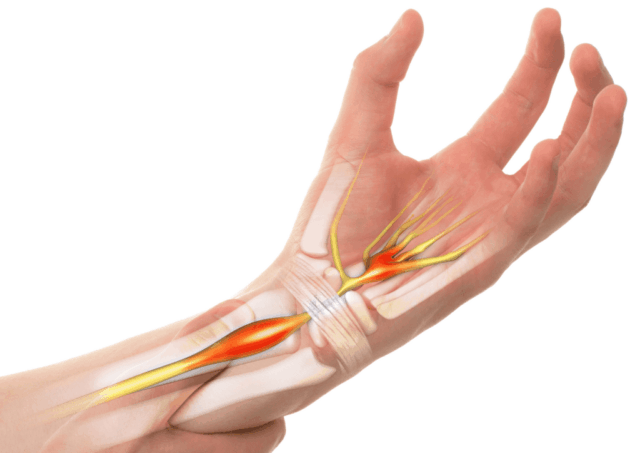
Carpal tunnel syndrome

Compression of the median nerve at the wrist may cause numbness, tingling or pain affecting the thumb, index finger, middle finger and part of the ring finger.

Ulnar nerve compression

Compression of the ulnar nerve may cause symptoms affecting the little finger and part of the ring finger.

Triangular fibrocartilage complex injury

The triangular fibrocartilage complex supports the little-finger side of the wrist. Injury may cause pain, clicking or discomfort during rotation and weight-bearing.

Ganglion cyst

A ganglion is a fluid-filled lump that commonly develops around the wrist or hand. Some ganglions cause no symptoms, while others may cause pain or pressure.

Arthritis

Arthritis can affect the wrist, thumb or finger joints and may lead to pain, stiffness and difficulty with daily tasks.

Who is more likely to develop hand and wrist pain?

Hand and wrist pain can affect people of any age. However, repetitive hand use, manual work, racquet sports, weight training, previous trauma and certain medical conditions may increase the likelihood of symptoms.

People commonly affected include:

  • Office workers
  • Healthcare workers
  • Musicians
  • Tradespeople
  • Mechanics
  • Chefs
  • Tennis and badminton players
  • Golfers
  • Climbers
  • Gym users
  • Cyclists
  • People with previous wrist fractures

Medical conditions such as diabetes, inflammatory arthritis and thyroid disorders may also relate to certain hand or nerve symptoms.

Can computer or phone use cause wrist pain?

Computer and phone use may contribute to symptoms when the hand remains in one position for long periods or performs repeated movements. However, device use is usually one possible factor rather than the sole explanation for wrist or hand pain.

Factors may include:

  • Sustained wrist extension
  • Repetitive mouse use
  • Forceful typing
  • Limited movement breaks
  • Holding a phone for long periods
  • Pressure against the wrist
  • An unsuitable workstation height

Changing hand position, taking regular breaks and reviewing equipment may help reduce aggravation. Nevertheless, persistent pain or numbness should not automatically be attributed to posture.

Can hand and wrist pain come from a nerve?

Yes. Nerve compression or irritation may cause burning, tingling, numbness, electric sensations or weakness in the hand. The affected fingers often provide clues about which nerve may be involved, although a full assessment may also need to consider the elbow, shoulder and neck.

Nerve-related symptoms may include:

  • Night-time numbness
  • Pins and needles
  • Dropping objects
  • Reduced grip
  • Loss of fine finger control
  • Symptoms travelling from the forearm
  • Weakness in the thumb or fingers

Persistent weakness or loss of sensation requires clinical assessment.

How is hand and wrist pain assessed?

Assessment usually begins with a discussion about the injury, symptoms and activities that aggravate the pain. A physical examination then assesses movement, strength, sensation, joint stability and the function of nearby tendons, ligaments and nerves.

A clinical assessment may include:

  • Medical history
  • Pain-location mapping
  • Wrist and finger movement
  • Grip-strength testing
  • Tendon assessment
  • Ligament and joint examination
  • Sensation and nerve testing
  • Functional movement testing
  • Sports and occupational history
  • Review of previous imaging

The clinician may also assess the elbow, shoulder or neck if symptoms suggest referred pain or nerve involvement.

Do I need an X-ray, MRI or ultrasound scan?

Not everyone with hand or wrist pain requires imaging. The choice depends on the injury, clinical findings and whether a scan would influence diagnosis or management. Significant trauma, suspected fractures or persistent symptoms may make imaging more relevant.

X-ray

X-rays may help assess fractures, bone alignment and joint changes.

MRI

MRI may provide additional information about ligaments, cartilage, tendons, bone and deeper soft tissues.

Musculoskeletal ultrasound

Ultrasound can assess selected tendons, nerves, cysts and superficial soft tissues in real time. It may also help evaluate structures during movement.

CT scan

A CT scan may be considered when more detailed images of the bones are required.

The most suitable scan depends on the structure being assessed.

What treatment options are available for hand and wrist pain?

Management depends on the diagnosis, symptom duration and effect on daily function. Many conditions begin with education, temporary activity modification and rehabilitation. Splints, medication or selected procedures may also be considered following clinical assessment.

Possible management options include:

  • Education about the condition
  • Adjustment of aggravating tasks
  • Temporary reduction in load
  • Wrist or thumb support where appropriate
  • Hand and wrist exercises
  • Progressive strengthening
  • Mobility exercises
  • Grip rehabilitation
  • Workstation or equipment changes
  • Medication following medical advice
  • Sports ultrasound where appropriate
  • Selected image-guided procedures

Depending on the individual’s condition and clinical assessment, certain procedures may be considered as part of a broader management plan.

Can injections and ultrasound-guided procedures help hand and wrist pain?

Yes. Many hand and wrist conditions respond well to non-surgical, image-guided treatments. Delivered under ultrasound guidance for accuracy, these can reduce pain, support healing and, in some cases, avoid the need for surgery. The right choice depends on the specific diagnosis.

Depending on the condition, options may include:

Corticosteroid (steroid) injection — a steroid injection settles inflammation and pain, and can be very effective for conditions such as trigger finger, De Quervain’s tenosynovitis and carpal tunnel syndrome, and for a flare of gout or joint arthritis. The effect can be temporary, so it is often combined with activity changes and rehabilitation.

Platelet-rich plasma (PRP) — PRP uses a concentrate of your own blood to deliver growth factors that support healing. It may be considered for tendon and ligament problems, and for selected tears such as a triangular fibrocartilage complex (TFCC) tear, where it can be combined with treatment of a neighbouring tendon such as the extensor carpi ulnaris (ECU).

Prolotherapy — this involves injecting a mild irritant solution, commonly dextrose, to stimulate the body’s own local healing response, and may be considered for some persistent tendon, ligament or joint pain.

Ultrasound-guided needle release — for trigger finger, the tight A1 pulley can be released with a needle under local anaesthetic and ultrasound guidance, freeing the tendon without open surgery.

Nerve hydrodissection — for a compressed nerve, such as in carpal tunnel syndrome or ulnar nerve irritation, fluid is injected under ultrasound guidance to gently free the nerve from the surrounding tissue.

Ganglion aspiration — for a ganglion cyst, the fluid can be withdrawn with a needle, sometimes together with a steroid injection; this can help some people, although the cyst may return.

These treatments are chosen according to the diagnosis and are most effective as part of a broader plan that includes rehabilitation. Ultrasound guidance helps place each treatment precisely and safely, and the potential benefits and limitations should be discussed beforehand.

An injection should not replace assessment of the underlying condition.

What exercises may help hand and wrist pain?

Exercises may help maintain movement, restore strength and improve tolerance for gripping or daily activities. However, the most suitable exercises depend on whether the symptoms involve a tendon, joint, ligament or nerve.

A rehabilitation programme may include:

  • Gentle wrist mobility
  • Finger and thumb movement
  • Progressive grip training
  • Forearm strengthening
  • Tendon-gliding exercises
  • Nerve-gliding movements where appropriate
  • Functional task practice
  • Gradual return to sport or work

Exercises should progress gradually. Moreover, persistent swelling, worsening numbness or increasing weakness should prompt further assessment.

What activities may make hand and wrist pain worse?

Activities involving repetitive gripping, forceful wrist movement, weight-bearing through the hand or prolonged positioning may aggravate symptoms. However, the trigger depends on the condition, so modification should focus on the relevant activity rather than complete rest.

Common triggers include:

  • Typing or mouse use
  • Carrying heavy bags
  • Push-ups and planks
  • Weightlifting
  • Racquet sports
  • Golf
  • Cycling
  • Using hand tools
  • Opening tight containers
  • Repetitive phone use

Activity modification may involve reducing load, changing grip, altering technique or taking more frequent breaks.

Can hand and wrist pain improve without surgery?

Many hand and wrist conditions begin with non-surgical management and may improve over time. However, recovery varies according to the diagnosis, severity, duration and functional demands. Surgery may be considered when a significant injury or persistent condition meets specific clinical indications.

Regular review may help monitor:

  • Pain and swelling
  • Movement
  • Grip strength
  • Sensation
  • Stability
  • Work or sporting function

If symptoms do not progress as expected, further investigation or another management approach may be discussed.

When should I seek medical assessment?

Seek assessment when pain persists, repeatedly returns or affects grip, hand function, work or sport. Prompt review may be needed after significant trauma or when symptoms include deformity, severe swelling, loss of sensation or an inability to move the hand or wrist.

Consider assessment if:

  • Pain continues for several weeks
  • Grip strength decreases
  • Numbness becomes persistent
  • Swelling does not settle
  • Clicking becomes painful
  • Symptoms regularly disturb sleep
  • Pain follows a fall
  • Daily activities become difficult
  • Self-management has not helped

Urgent medical attention may be appropriate after trauma if the wrist or hand appears deformed, changes colour, loses sensation or cannot move or hold objects.

Assessment at Triaxis Sports & Joint Clinic

Triaxis Sports & Joint Clinic provides assessment for hand and wrist pain, upper-limb injuries, nerve symptoms and other musculoskeletal conditions.

Clinical assessment focuses on understanding symptom location, hand and wrist function, grip, movement, activity demands and medical history. Depending on the findings, the assessment may include a musculoskeletal examination, nerve screening, sports ultrasound where appropriate and review of previous imaging.

Patient education and shared decision-making form an important part of the consultation. Therefore, individuals can better understand the possible cause of their symptoms, whether further investigations may help and which management options may be appropriate following clinical evaluation.

Frequently Asked Questions About Hand and Wrist Pain

Why does my wrist hurt without an injury?

Wrist pain may develop gradually because of repetitive loading, tendon irritation, nerve compression, joint conditions or a ganglion cyst. A clear traumatic event is not always present. Assessment may help identify the likely structure involved.

Can wrist pain come from my neck?

Yes. Nerve irritation in the neck may cause pain, tingling, numbness or weakness extending into the arm and hand. A clinical examination can help distinguish referred or nerve-related symptoms from a local wrist condition.

Is wrist pain always carpal tunnel syndrome?

No. Carpal tunnel syndrome is one possible cause, particularly when numbness affects the thumb, index and middle fingers. Tendon problems, sprains, arthritis and other nerve conditions may cause similar symptoms.

Should I wear a wrist brace?

A brace or splint may support selected injuries or reduce aggravating movement. However, the appropriate design and duration depend on the diagnosis. Prolonged use without guidance may contribute to stiffness or reduced strength.

How long does wrist pain take to improve?

Recovery varies according to the condition and severity. Mild soft-tissue symptoms may settle over several weeks, while ligament injuries, fractures and persistent tendon or nerve conditions may require longer management and review.

Can I exercise with wrist pain?

Many people can remain active after modifying exercises that increase symptoms. For example, changing grip or avoiding heavy weight-bearing through the wrist may help. Exercise selection should reflect the diagnosis and current function.

Does a ganglion cyst need treatment?

Not always. Some ganglion cysts do not cause pain or affect function and may only require observation. Assessment may be appropriate if the cyst is painful, growing, limiting movement or affecting nearby nerves.

When is surgery considered for wrist pain?

Surgery may be considered for selected fractures, significant ligament injuries, persistent nerve compression, instability or other conditions that meet clinical criteria. Most people do not begin with surgery.

About the Author

Dr Dinesh Sirisena is a Consultant in Sports, Exercise and Musculoskeletal Medicine. His clinical work includes the assessment and non-surgical management of sports injuries, joint conditions and musculoskeletal pain.

Medical Disclaimer

This page provides general educational information and does not replace an individual medical consultation. Hand and wrist symptoms can have different causes, and suitable investigations or management options depend on each person’s injury, medical history and clinical assessment.


Leave a Reply

Your email address will not be published. Required fields are marked *