Hip Impingement

Hip Impingement: Causes, Symptoms and Treatment Options

Written and medically reviewed by Dr Dinesh Sirisena
Consultant in Sports, Exercise & Musculoskeletal Medicine
Triaxis Sports & Joint Clinic

Hip impingement, also called femoroacetabular impingement or FAI syndrome, occurs when the shape of the femoral head, hip socket or both contributes to contact during certain hip movements. It may cause groin pain, stiffness, clicking or difficulty with squatting and sport. Many people begin with activity modification and rehabilitation, while surgery may be considered for selected cases following clinical assessment.

Hip Joint Pain

Key Points at a Glance

  • Hip impingement commonly causes pain in the groin or front of the hip.
  • Symptoms may increase with squatting, twisting, prolonged sitting or deep hip bending.
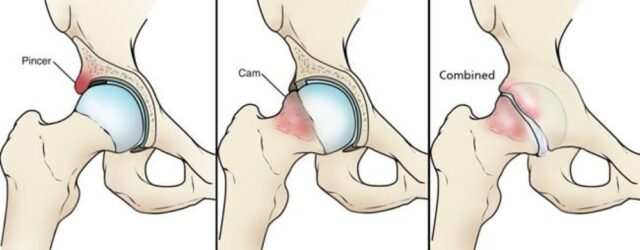
  • Cam, pincer and combined patterns describe different bone-shape features.
  • A bone-shape difference on imaging does not always mean that it causes symptoms.
  • Hip labrum or cartilage changes may occur alongside symptomatic impingement.
  • Clinical assessment considers symptoms, movement and imaging together.
  • X-rays are often the initial imaging option for ongoing hip pain.
  • Many people begin with non-surgical management before surgery is considered.

What is hip impingement?

Hip impingement is a condition in which the femoral head, the hip socket or both have shape features that can create contact during certain movements. When these features occur together with pain, movement restriction and clinical signs, healthcare professionals may use the term femoroacetabular impingement syndrome.

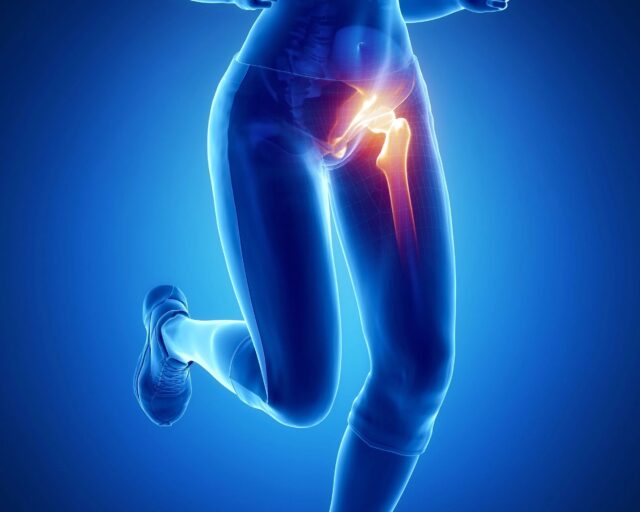
The hip is a ball-and-socket joint. The rounded femoral head sits inside the acetabulum, which forms part of the pelvis. Articular cartilage covers the joint surfaces, while the labrum forms a rim around the socket.

In a hip that moves comfortably, the femoral head and socket remain coordinated throughout bending and rotation. In hip impingement, contact may occur earlier during deep flexion or rotation.

Three patterns are commonly described:

  • Cam morphology: Additional bone or reduced roundness around the femoral head-neck junction.
  • Pincer morphology: Increased coverage around the rim of the hip socket.
  • Combined morphology: Features of both cam and pincer patterns.

These imaging features can exist without pain. Therefore, a diagnosis should not rely on the scan alone. Symptoms, clinical signs and imaging findings need to fit together.

What does hip impingement feel like?

Hip impingement commonly causes groin pain, stiffness or reduced hip movement. Some people describe a sharp pain during squatting, twisting or pivoting, while others notice a dull ache after prolonged sitting, running or exercise. A click or catching sensation may also occur.

Common symptoms include:

  • Groin pain
  • Pain at the front of the hip
  • Hip stiffness
  • Reduced ability to squat deeply
  • Pain during twisting or pivoting
  • Discomfort after prolonged sitting
  • Pain while entering or leaving a car
  • Clicking or catching
  • Reduced sporting tolerance
  • Limping during a painful episode

AAOS notes that pain, stiffness and limping are common features, while turning, twisting and squatting may produce sharper pain. However, similar symptoms may also arise from labral conditions, hip-flexor problems, osteoarthritis or referred pain from the lower back.

Where is hip impingement pain usually felt?

Pain is most often felt in the groin or at the front of the hip. However, some people experience discomfort towards the outer hip, upper thigh or buttock. The location can provide clues, but it cannot confirm hip impingement without a wider clinical assessment.

People sometimes describe a “C-sign” by placing the thumb at the front of the hip and the fingers around the side.

Symptoms may spread towards:

  • The upper thigh
  • The outer hip
  • The buttock
  • The lower abdomen
  • The knee in some hip-joint presentations

Pain that mainly travels below the knee, or occurs with numbness and tingling, may suggest that a spinal or nerve-related condition also requires assessment.

Why does my hip hurt when I squat?

Squatting places the hip into flexion and may also involve inward rotation. In a person with symptomatic hip impingement, these movements can increase contact between the femoral head-neck area and the rim of the socket, causing groin pain or restricted movement.

Deep squats are not automatically harmful. However, symptoms may increase when:

  • The squat depth exceeds the person’s current hip tolerance.
  • The stance width does not suit their hip anatomy.
  • Training volume increases suddenly.
  • Heavy resistance is added before movement control develops.
  • Associated labral or cartilage irritation is present.

Activity modification may involve reducing squat depth, adjusting stance, lowering resistance or using another exercise temporarily. The aim is usually to maintain useful movement while reducing repeated aggravation.

What causes hip impingement?

Hip impingement relates to differences in the shape of the femoral head-neck junction, the hip socket or both. These shape features may develop during growth, while repeated loading in certain sports may influence how symptoms appear. Not everyone with these features develops pain.

Hip Impingement


The cause is often multifactorial. Factors may include:

  • Cam morphology
  • Pincer morphology
  • Combined morphology
  • Repeated deep hip flexion
  • High-volume pivoting or kicking sports
  • Previous childhood or adolescent hip conditions
  • Reduced hip mobility
  • Changes in strength or movement control
  • Associated labral or cartilage changes

Abnormal or repeated contact can place stress on the labrum and articular cartilage over time. However, structural differences should not be presented as proof that tissue damage or arthritis will inevitably occur.

Does hip impingement cause a labral tear?

Hip impingement may occur alongside a labral injury because repeated contact can place stress on the rim of cartilage around the socket. However, not every person with hip impingement has a symptomatic labral tear, and labral changes on imaging do not always explain the pain.

The labrum helps support the hip socket and contributes to joint stability. Symptoms that may raise consideration of labral involvement include:

  • Deep groin pain
  • Painful clicking
  • Catching
  • Symptoms during twisting
  • Discomfort during prolonged sitting
  • Reduced sporting function

Clinical findings and imaging should be interpreted together before deciding whether the labrum contributes to the symptoms.

Who is more likely to develop hip impingement symptoms?

Hip impingement symptoms may affect active adolescents and adults, particularly those who perform repeated hip flexion, rotation, sprinting, kicking or pivoting. However, the condition can also affect people who do not participate in organised sport.

Activities commonly associated with higher hip demands include:

  • Football
  • Rugby
  • Hockey
  • Martial arts
  • Dance
  • Gymnastics
  • Weightlifting
  • Running
  • Tennis
  • Badminton
  • Golf
  • Cricket

Other factors may include:

  • Previous hip injury
  • A rapid increase in training
  • Reduced hip mobility
  • Repeated deep squatting
  • Childhood or adolescent hip conditions
  • Prolonged sitting in a flexed position

Having one or more of these factors does not mean that a person will develop symptoms.

What activities may make hip impingement worse?

Activities that place the hip into deep flexion, rotation or repeated loading may increase symptoms. The trigger varies between individuals, so activity modification should focus on the relevant movement rather than require complete rest.

Common aggravating activities include:

  • Deep squats
  • Lunges
  • Low sitting positions
  • Getting out of a low chair
  • Entering or leaving a car
  • Pivoting
  • Kicking
  • Sprinting
  • Running uphill
  • Cycling in a low position
  • Heavy leg presses
  • Prolonged sitting

Modifications may include changing range, resistance, duration, technique or frequency. However, avoiding all movement for long periods may contribute to reduced strength and conditioning.

How is hip impingement diagnosed?

Diagnosis usually involves three components: symptoms that fit the condition, clinical signs during examination and imaging findings that support the diagnosis. A bone-shape feature on an X-ray without symptoms is not enough to diagnose FAI syndrome.

A clinical assessment may include:

  • Medical and sporting history
  • Pain-location mapping
  • Hip range of motion
  • Strength testing
  • Walking assessment
  • Squat and lunge evaluation
  • Tests involving hip flexion and rotation
  • Lower-back and pelvic examination
  • Review of training demands
  • Review of previous imaging

The clinician may also assess for:

  • Labral injury
  • Hip osteoarthritis
  • Gluteal tendon conditions
  • Hip-flexor or adductor problems
  • Bone stress injury
  • Sacroiliac joint pain
  • Referred spinal symptoms

No single physical test should be used alone to confirm the diagnosis.

Do I need an X-ray, MRI or ultrasound?

Not everyone with suspected hip impingement requires every type of scan. For ongoing hip pain, X-rays are commonly used as initial imaging. MRI may provide information about the labrum, cartilage and other soft tissues, while ultrasound has a more limited role for structures deep inside the hip joint.

X-ray

X-rays may help assess:

  • Cam or pincer morphology
  • Bone alignment
  • Hip-joint space
  • Osteoarthritis
  • Previous bone injury
  • Other structural conditions

The American College of Radiology considers hip and pelvic radiographs usually appropriate as initial imaging for chronic hip pain.

MRI

MRI may help assess:

  • Labral changes
  • Articular cartilage
  • Bone stress injuries
  • Tendons and muscles
  • Other soft-tissue conditions

An MR arthrogram may be considered in selected cases when detailed assessment of the labrum is required.

Musculoskeletal ultrasound

Ultrasound may assist with:

  • Hip-flexor tendons
  • Gluteal tendons
  • Bursae
  • Dynamic assessment of selected superficial structures
  • Image guidance for certain procedures

Ultrasound cannot show all parts of the labrum or deep hip cartilage as clearly as MRI.

What treatment options are available for hip impingement?

Management depends on symptoms, hip function, activity requirements and imaging where appropriate. Many people begin with education, activity modification and exercise-based rehabilitation. Surgery may be discussed when symptoms remain limiting and the clinical findings support that option.

Non-surgical management may include:

  • Education about the condition
  • Adjustment of painful hip positions
  • Temporary changes to training
  • Hip and trunk strengthening
  • Movement retraining
  • Mobility exercises where appropriate
  • Gradual return to sport
  • Medication following medical advice
  • Review of work or sitting demands
  • Rehabilitation planning

An NHS specialist orthopaedic centre advises exercise-based physiotherapy as an initial management approach for symptomatic FAI syndrome, while recognising that both rehabilitation and surgery may be considered depending on the individual presentation.

What exercises may help hip impingement?

Exercises may help improve hip strength, trunk control, movement tolerance and confidence during everyday or sporting activities. However, there is no single programme for every person, and repeated forced movement into a painful range may need modification.

A rehabilitation programme may include:

  • Gluteal strengthening
  • Hip-abductor exercises
  • Hip-extensor strengthening
  • Trunk-control exercises
  • Single-leg balance
  • Squat or lunge modification
  • Gradual hip mobility work
  • Running or change-of-direction progression
  • Sport-specific conditioning

Exercise selection should reflect:

  • Painful movements
  • Current strength
  • Hip range of motion
  • Sporting demands
  • Work activities
  • Other hip, knee or spine conditions

Mild effort may be acceptable, but repeated sharp groin pain or a continuing reduction in function may require review.

Can an injection help hip impingement?

An image-guided hip-joint injection may be considered in selected cases to help assess whether pain arises from inside the joint or to support symptom management. However, an injection does not change the underlying bone shape and should not be described as a permanent solution.

The procedure may contain:

  • Local anaesthetic
  • Corticosteroid where clinically appropriate

Its role may include:

  • Supporting diagnostic assessment
  • Temporarily modifying symptoms
  • Helping guide rehabilitation discussions
  • Clarifying whether the hip joint contributes to the pain

For a hip labral injury, platelet-rich plasma (PRP) offers an option that aims to support healing rather than only relieve symptoms.

PRP is a concentrate of your own blood, rich in growth factors. Under image guidance it can be injected into the hip joint and directed towards the labrum, with the aim of supporting the labrum’s natural healing and calming the associated joint irritation, as part of a non-surgical plan alongside rehabilitation. It is an emerging option best suited to selected labral injuries, and the potential benefits and limitations are discussed beforehand.

Depending on the individual’s condition and clinical assessment, certain procedures may be considered as part of a broader management plan.

Possible risks, limitations and alternatives should be discussed before proceeding.

Can hip impingement improve without surgery?

Many people begin with non-surgical management and may improve through activity modification, rehabilitation and gradual return to function. However, progress varies according to symptom duration, hip structure, activity demands and whether associated labral or cartilage conditions are present.

Non-surgical care does not reshape the bone. Instead, it may help by:

  • Improving strength
  • Changing movement strategies
  • Building tolerance to activity
  • Reducing repeated aggravating positions
  • Supporting gradual return to sport
  • Addressing nearby hip, trunk or lower-limb factors

Persistent pain does not automatically mean surgery is required.

When is surgery considered for hip impingement?

Surgical review may be considered when symptoms remain limiting despite a suitable period of non-surgical management and when examination and imaging support symptomatic hip impingement. Surgery is not appropriate for every person with cam or pincer morphology.

Hip arthroscopy may involve:

  • Reshaping selected bone areas
  • Assessing the labrum
  • Repairing or treating selected labral injuries
  • Addressing damaged cartilage where appropriate

Surgical decisions may consider:

  • Symptom severity
  • Functional limitations
  • Response to rehabilitation
  • Imaging findings
  • Hip-joint cartilage condition
  • Age and general health
  • Work and sporting goals

Hip arthroscopy has recognised roles in selected FAI and labral presentations, but it also involves risks, recovery and rehabilitation.

How long does hip impingement take to improve?

There is no single recovery timeline. Improvement depends on symptom duration, activity demands, rehabilitation response and whether surgery is required. Non-surgical management may need several months, while recovery after surgery generally involves a structured rehabilitation period.

Progress may be influenced by:

  • Training volume
  • Work demands
  • Hip strength
  • Movement tolerance
  • Associated labral or cartilage changes
  • Ability to modify aggravating activities
  • Previous hip conditions
  • Overall health

Return to sport should focus on function, strength and movement tolerance rather than time alone.

When should I seek medical assessment?

Seek assessment when groin or hip pain persists, repeatedly returns or affects walking, work, exercise or sleep. Prompt review may be required after significant trauma, if weight-bearing becomes difficult or if the hip becomes acutely painful with fever or marked loss of movement.

Consider assessment if:

  • Pain continues for several weeks
  • Squatting or sitting becomes increasingly difficult
  • A limp develops
  • Hip movement becomes restricted
  • Painful clicking or catching occurs
  • Sporting participation becomes limited
  • Pain follows an injury
  • Symptoms regularly disturb sleep
  • Self-management has not helped

Urgent medical attention may be appropriate for severe pain after trauma, inability to bear weight, a hot swollen joint, fever or sudden unexplained loss of function.

Assessment at Triaxis Sports & Joint Clinic

Triaxis Sports & Joint Clinic provides assessment for hip impingement, hip pain, sports injuries and other musculoskeletal conditions involving the pelvis and lower limb.

Clinical assessment focuses on understanding symptom location, hip movement, strength, functional limitations, activity demands and medical history. Depending on the findings, assessment may include musculoskeletal examination, functional movement analysis, review of previous imaging and sports ultrasound for selected surrounding soft-tissue structures.

Patient education and shared decision-making form an important part of the consultation. Therefore, individuals can better understand the possible source of their symptoms, whether further investigations may help and which management options may be appropriate following clinical evaluation.

Frequently Asked Questions About Hip Impingement

Is hip impingement the same as a labral tear?

No. Hip impingement describes contact related to the shape and movement of the hip bones, while a labral tear affects the cartilage rim around the socket. They can occur together, but one does not automatically confirm the other.

Does clicking mean that I have hip impingement?

Not necessarily. Clicking may arise from tendons, the labrum or normal joint movement. Painless clicking is common. Painful clicking, catching or reduced function may require assessment.

Can I run with hip impingement?

Some people can continue running after adjusting distance, speed, hills or training frequency. However, limping or increasing groin pain suggests that the activity should be modified and assessed.

Should I avoid squats?

Not always. Squat depth, stance and resistance may be modified according to symptoms and hip movement. Repeated deep, sharp pain should not be forced.

Can prolonged sitting worsen hip impingement?

Yes. Prolonged sitting places the hip in flexion and may aggravate groin pain in some people. Position changes and movement breaks may help reduce discomfort.

Does hip impingement always lead to arthritis?

No. Although FAI morphology may relate to cartilage and labral changes in some people, it does not mean that every person will develop symptomatic arthritis.

Do I need surgery if an X-ray shows cam morphology?

No. Cam morphology can occur without symptoms. Surgery should not be based on an X-ray alone and is considered only when symptoms, clinical signs and imaging findings support the diagnosis.

Can hip impingement return after treatment?

Symptoms may recur if activity load increases beyond current tolerance or if other contributing factors remain. Further assessment can help determine whether the symptoms relate to impingement or another hip condition.

About the Author

Dr Dinesh Sirisena is a Consultant in Sports, Exercise and Musculoskeletal Medicine. His clinical work includes the assessment and non-surgical management of sports injuries, joint conditions and musculoskeletal pain.

Medical Disclaimer

This page provides general educational information and does not replace an individual medical consultation. Groin and hip pain can have different causes, and suitable investigations or management options depend on each person’s symptoms, medical history and clinical assessment.

Leave a Reply

Your email address will not be published. Required fields are marked *