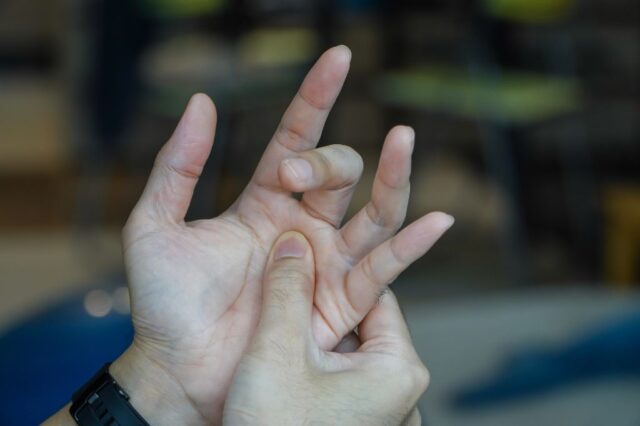
Trigger Fingers

Trigger Finger: Causes, Symptoms and Treatment Options

Written and medically reviewed by Dr Dinesh Sirisena
Consultant in Sports, Exercise & Musculoskeletal Medicine
Triaxis Sports & Joint Clinic

Trigger finger is a condition in which a finger or thumb becomes painful, stiff, catches or locks during movement. It develops when a flexor tendon does not glide smoothly through a pulley near the base of the finger. Management may include activity modification, splinting, exercises, medication and a corticosteroid injection. Where triggering persists, a minimally invasive ultrasound-guided needle release can often free the tendon without the need for open surgery.

Trigger Finger Treatment

Key Points at a Glance

  • Trigger finger may affect one or more fingers or the thumb.
  • Symptoms commonly include pain, clicking, catching, stiffness or locking.
  • Symptoms may feel worse in the morning or after periods of rest.
  • A small tender lump may develop near the base of the affected finger.
  • Diabetes and certain inflammatory conditions may increase the likelihood of trigger finger.
  • Diagnosis usually relies on medical history and physical examination.
  • Scans are not required for every person.
  • Many people begin with non-surgical management before surgery is considered.
  • A minimally invasive ultrasound-guided needle release can often treat persistent triggering without open surgery.

What is trigger finger?

Trigger finger is a condition that affects the flexor tendon responsible for bending a finger or thumb. The tendon may become thickened or irritated, making it harder to move smoothly through a narrow pulley near the base of the finger. This can cause clicking, catching or locking during movement.

The medical term for trigger finger is stenosing tenosynovitis. When the thumb is involved, it may be called trigger thumb.

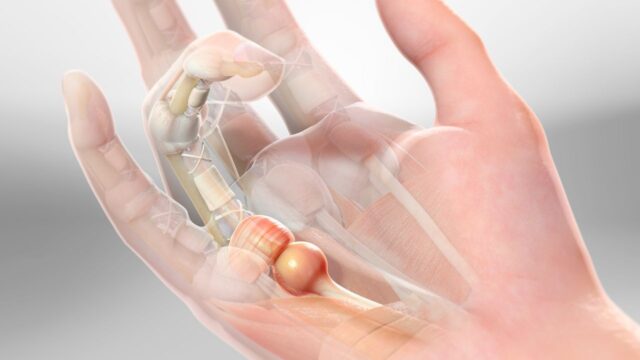
Flexor tendons run from the muscles of the forearm through the palm and into the fingers. A series of tissue bands called pulleys hold the tendons close to the bones.

The A1 pulley, located near the base of the finger, is commonly involved in trigger finger. If the tendon or surrounding sheath thickens, the tendon may catch as it moves through this narrow space.

As a result, the finger may suddenly straighten with a clicking or popping movement. In more advanced cases, it may remain bent and require assistance from the other hand.

What does trigger finger feel like?

Trigger finger commonly causes pain or tenderness near the base of the finger or thumb, together with stiffness, clicking, catching or locking. Symptoms may be more noticeable in the morning, after rest or during repeated gripping activities.

Common symptoms include:

  • Pain at the base of the finger
  • Tenderness in the palm
  • Finger stiffness
  • Clicking or popping
  • Catching during bending or straightening
  • A finger that temporarily locks
  • A small tender lump or nodule
  • Difficulty gripping
  • Reduced hand function
  • Symptoms that are worse after waking

Some people experience mild clicking without significant pain. Others may find that the finger locks in a bent position and becomes difficult to straighten.

Trigger finger may affect one finger or several fingers at the same time. The ring finger and thumb are frequently involved, although any digit can develop symptoms.

Why does my finger click or lock?

Clicking or locking occurs when the flexor tendon has difficulty passing through the A1 pulley at the base of the finger. As the tendon moves through the narrowed area, it may catch and then release suddenly, creating a clicking or triggering sensation.

The tendon may develop a small thickened area or nodule. Meanwhile, the pulley may also become thicker or tighter.

When the finger bends, the tendon may pass through the pulley in one direction but struggle to return smoothly. This explains why the finger may catch when straightening.

In a more advanced presentation:

  • The finger may remain partly bent.
  • The person may need the other hand to straighten it.
  • Movement may become increasingly limited.
  • Stiffness may develop because the finger is used less.

A locked finger does not always mean permanent damage. However, persistent locking or loss of movement should be assessed.

Why is trigger finger worse in the morning?

Trigger finger often feels worse in the morning because the finger remains relatively still during sleep. Tendon movement may become more restricted after rest, while stiffness and swelling around the tendon sheath can make the first few movements more difficult.

Many people notice that the finger gradually moves more easily after gentle use. However, repeated gripping later in the day may cause pain or catching to return.

Night-time positioning may also affect symptoms. For example, sleeping with the fingers tightly bent may increase morning locking in some individuals.

A night splint may therefore be considered to keep the affected finger in a straighter position while sleeping. Suitability depends on the severity of symptoms and clinical assessment.

Trigger Finger Anatomy

What causes trigger finger?

Trigger finger develops when the flexor tendon and its surrounding pulley no longer allow smooth movement. The exact cause is not always clear. Repetitive gripping may aggravate symptoms, while diabetes, inflammatory arthritis and certain hand conditions may increase the likelihood of developing it.

Possible contributing factors include:

  • Repetitive gripping
  • Frequent use of hand tools
  • Heavy lifting
  • Racquet sports
  • Golf
  • Climbing
  • Gardening
  • Manual work
  • Diabetes
  • Rheumatoid arthritis
  • Previous hand or wrist conditions
  • Carpal tunnel syndrome

However, trigger finger should not always be described simply as an overuse injury. Many people develop it without a clear change in work, sport or hand activity.

Activities may aggravate an existing condition rather than serve as the only cause.

Who is more likely to develop trigger finger?

Trigger finger can affect adults of different ages, although it is more frequently seen in middle-aged and older adults. People with diabetes, rheumatoid arthritis or repeated gripping demands may have a higher likelihood of developing symptoms.

It may occur in:

  • Office workers
  • Manual workers
  • Healthcare workers
  • Musicians
  • Gardeners
  • Tradespeople
  • Golfers
  • Tennis and badminton players
  • Weightlifters
  • People with diabetes
  • People with inflammatory joint conditions

More than one finger may be affected, particularly in people with diabetes or other underlying medical conditions.

Having these risk factors does not mean that trigger finger will necessarily develop.

What activities may make trigger finger worse?

Activities involving repeated gripping, forceful finger bending or prolonged tool use may increase pain, clicking or locking. However, the aggravating task varies between individuals, so activity modification should focus on the relevant movement rather than require complete avoidance of hand use.

Common triggers include:
  • Carrying heavy shopping bags
  • Opening jars
  • Using scissors
  • Gardening
  • Weightlifting
  • Golf
  • Racquet sports
  • Using hand tools
  • Repetitive food preparation
  • Holding a steering wheel for long periods
  • Frequent phone gripping
  • Climbing
Activity modification may involve:
  • Reducing gripping force
  • Using larger handles
  • Alternating hands
  • Taking regular breaks
  • Temporarily lowering exercise load
  • Avoiding repeated triggering where possible

Complete rest may reduce short-term irritation but can also contribute to stiffness if continued for too long.

How is trigger finger diagnosed?

Trigger finger is usually diagnosed through a discussion about symptoms and a physical examination. The clinician assesses tenderness, clicking, locking, tendon movement and whether the finger can bend and straighten fully. Imaging is not usually required when the presentation is typical.

A clinical assessment may include:

  • Medical history
  • Symptom duration
  • Identification of the affected finger
  • Palpation near the A1 pulley
  • Finger movement assessment
  • Grip and hand-function testing
  • Examination for a tendon nodule
  • Assessment of joint movement
  • Nerve testing where appropriate
  • Review of diabetes or inflammatory conditions

The clinician may ask the person to repeatedly open and close the hand to observe catching or locking.

Other conditions may also cause finger stiffness or clicking, including arthritis, tendon injury, Dupuytren’s contracture and joint conditions. Therefore, the full examination remains important.

Do I need an X-ray, MRI or ultrasound?

Most people with a typical trigger finger presentation do not require imaging. A scan may be considered when the diagnosis is uncertain, symptoms followed trauma or another joint, tendon or soft-tissue condition may be present.

X-ray

An X-ray does not show trigger finger directly. However, it may help assess:

  • Arthritis
  • Previous fractures
  • Joint alignment
  • Other bone-related causes of stiffness

Musculoskeletal ultrasound

Ultrasound may show:

  • Thickening of the flexor tendon
  • Changes around the A1 pulley
  • Tendon movement during finger motion
  • Fluid around the tendon
  • Another soft-tissue condition

It may also guide selected injections where appropriate.

MRI

MRI is rarely needed for a straightforward trigger finger. It may be considered when the symptoms do not fit the usual presentation or another deeper condition is suspected.

What treatment options are available for trigger-finger?

Management depends on symptom severity, duration, hand function and any associated medical conditions. Options may include activity modification, splinting, gentle exercises, medication, corticosteroid injection and surgery in selected cases.

Possible management options include:

  • Education about the condition
  • Modification of aggravating activities
  • Temporary reduction in forceful gripping
  • Night splinting
  • Gentle finger-mobility exercises
  • Tendon-gliding exercises
  • Medication following medical advice
  • Corticosteroid injection
  • Ultrasound-guided needle release of the A1 pulley
  • Surgical release where clinically indicated

A mild presentation may improve with activity modification and time. However, persistent locking, functional restriction or increasing stiffness may require further management.

Should I wear a splint for trigger-finger?

A finger splint may help reduce triggering by limiting movement through the painful range, particularly during sleep. It may be considered for mild or intermittent symptoms, although the type and duration should reflect the affected finger and daily hand requirements.

Splinting may aim to:

  • Prevent the finger from locking overnight
  • Reduce repeated tendon movement
  • Ease morning stiffness
  • Support activity modification

The splint may hold the finger straight or limit movement at a selected joint.

Prolonged splint use without suitable movement may contribute to stiffness. Therefore, the finger should usually remain active within a comfortable range unless a clinician advises otherwise.

What exercises may help trigger-finger?

Gentle movement may help maintain finger mobility and reduce stiffness. However, exercises do not mechanically remove the narrowing around the tendon, and repeated forceful triggering should be avoided. The programme should reflect symptom severity and hand function.

Exercises may include:

  • Gentle finger bending and straightening
  • Tendon-gliding movements
  • Thumb movement when trigger thumb is present
  • Comfortable hand opening
  • Light grip progression after symptoms settle
  • Functional movement practice

Exercises should remain smooth and controlled.

Repeatedly forcing a locked finger through a painful click may increase irritation. Likewise, heavy grip strengthening may not be appropriate during a painful phase.

Hand therapy may help guide splinting, movement and gradual return to work or sport.

Can a corticosteroid injection help trigger finger?

A corticosteroid injection into the tendon sheath may be considered when symptoms persist, affect function or do not improve with simpler measures. It aims to reduce swelling around the tendon and pulley, although the response varies and symptoms may recur.

The procedure may include local anaesthetic together with corticosteroid.

Possible considerations include:
  • The affected finger
  • Symptom duration
  • Severity of locking
  • Diabetes
  • Previous injections
  • Other hand conditions
  • Medication and bleeding risks
Possible risks may include:
  • Temporary pain after the injection
  • Bruising
  • Infection
  • Skin colour change
  • Local fat thinning
  • Temporary changes in blood glucose
  • Tendon injury, although uncommon
  • Incomplete or temporary improvement

Depending on the individual’s condition and clinical assessment, an injection may be considered as part of a broader management plan.

Can trigger finger be treated with an ultrasound-guided needle release?

Yes. An ultrasound-guided needle release — also called a percutaneous A1 pulley release. A minimally invasive procedure that can free a triggering finger without open surgery. It’s carried out in the clinic under local anaesthetic, using a needle to release the tight pulley while ultrasound shows the tendon and the surrounding structures.

After the area is numbed with local anaesthetic, the tip of a needle is used to gently divide the thickened A1 pulley — the band the tendon is catching on — so the tendon can glide freely again. Ultrasound guidance allows the pulley, the flexor tendon and the nearby nerves and blood vessels to be seen throughout, which helps the release to be both accurate and safe, and allows the tendon to be checked for smooth movement before the procedure is finished.

Because there is no open incision, the procedure is quick, leaves no surgical wound and usually allows a rapid return to normal hand use. A corticosteroid may sometimes be given at the same time. It is well suited to many trigger fingers, although careful assessment is important — particularly for the thumb, where nearby nerves call for extra caution — and, as with any procedure, it is not always successful and may occasionally need to be repeated or followed by open surgery.

Possible advantages include:

  • No open incision or stitches
  • Performed under local anaesthetic in the clinic
  • Ultrasound guidance to help protect nearby nerves and blood vessels
  • Usually a quick return to normal hand use

Does trigger finger improve without surgery?

Some mild cases may improve without surgery, particularly when aggravating activities are modified and the finger remains mobile. However, improvement varies, and persistent locking or functional restriction may require injection or surgical review.

Factors that may influence progress include:

  • Symptom duration
  • Severity of locking
  • Number of affected fingers
  • Diabetes
  • Daily gripping demands
  • Response to splinting
  • Previous treatment
  • Existing stiffness

Regular review may help determine whether continued observation remains appropriate.

When is surgery considered for trigger finger?

Surgery may be considered when symptoms remain functionally limiting despite non-surgical management, when the finger remains locked or when clinical findings support release of the affected pulley. It is not usually the first option for every person.

Trigger finger release involves opening the A1 pulley to create more room for the flexor tendon to move. In many people this can now be achieved through a minimally invasive ultrasound-guided needle release rather than open surgery, and open surgery is generally reserved for fingers that are not suitable for the needle technique or that continue to trigger despite it.

Surgery may be discussed when:

  • The finger remains persistently locked
  • Daily hand use becomes difficult
  • Symptoms continue after injection
  • Non-surgical measures have not provided sufficient improvement
  • Significant stiffness develops
  • The diagnosis remains clinically supported

Possible risks and expected recovery should be discussed during surgical review. Surgery can improve tendon movement, but no procedure should be described as risk-free or guaranteed.

How long does trigger finger usually last?

The duration varies according to severity, hand use, medical conditions and response to management. Mild symptoms may settle over several weeks, while longer-standing locking or stiffness may continue for months and require further clinical review.

Progress may depend on:

  • How long symptoms were present before assessment
  • Daily work and caregiving demands
  • Ability to reduce aggravating grip
  • Use of a splint where appropriate
  • Response to injection
  • Presence of diabetes
  • Number of affected fingers
  • Development of joint stiffness

Improvement in movement and hand function may be as relevant as changes in pain.

When should I seek medical assessment?

Seek assessment when clicking, locking or pain persists, repeatedly returns or affects gripping, work, caregiving or sport. Prompt review may be appropriate if the finger becomes fixed in one position, movement is increasingly restricted or symptoms follow an injury.

Consider assessment if:

  • The finger repeatedly locks
  • Pain continues for several weeks
  • Grip strength decreases
  • The finger cannot straighten fully
  • A tender lump develops
  • Several fingers are affected
  • Symptoms interfere with work
  • Morning stiffness becomes more severe
  • Self-management has not helped

Urgent review may be needed if the finger becomes severely swollen, red or hot, or if symptoms follow a cut or traumatic tendon injury.

Assessment at Triaxis Sports & Joint Clinic

Triaxis Sports & Joint Clinic provides assessment for trigger finger, trigger thumb, hand and wrist pain, tendon conditions and other upper-limb musculoskeletal concerns.

Clinical assessment focuses on symptom location, finger movement, triggering, grip, functional demands and relevant medical history. Depending on the findings, assessment may include musculoskeletal examination, functional hand testing, sports ultrasound where appropriate and review of previous investigations.

Patient education and shared decision-making form an important part of the consultation. Therefore, individuals can better understand the likely cause of their symptoms, whether further investigation may help and which management options may be appropriate following clinical evaluation.

Frequently Asked Questions About Trigger Finger

Is trigger finger the same as arthritis?

No. Trigger finger involves the flexor tendon and pulley system, whereas arthritis affects a joint. However, both can cause stiffness and pain, and they may occur together.

Can trigger finger affect more than one finger?

Yes. More than one finger may be involved at the same time or at different times. Multiple trigger fingers may be more common in people with diabetes or certain inflammatory conditions.

Can trigger finger cause numbness?

Numbness is not a typical main symptom. Persistent tingling or numbness may suggest a nerve condition such as carpal tunnel syndrome or another hand problem.

Should I keep straightening a locked finger?

Gentle movement may help maintain mobility, but repeatedly forcing the finger through a painful lock may increase irritation. Assessment may be appropriate if manual straightening is frequently required.

Is trigger finger caused by using a phone?

Phone use may aggravate symptoms through repeated gripping or thumb movement, but it does not explain every case. Trigger finger often develops without one clear activity.

Can I exercise with trigger finger?

Many people can remain active after modifying exercises that require heavy or repeated gripping. Straps, lighter loads or alternative hand positions may sometimes reduce aggravation.

Is trigger thumb treated differently?

Trigger thumb involves the same tendon-and-pulley process. Management options are broadly similar, although splint design and functional considerations may differ.

Can trigger finger return after treatment?

Yes. Symptoms may recur after non-surgical treatment and can occasionally return after surgery. Further assessment can confirm whether the symptoms represent recurrent trigger finger or another condition.

About the Author

Dr Dinesh Sirisena is a Consultant in Sports, Exercise and Musculoskeletal Medicine. His clinical work includes the assessment and non-surgical management of sports injuries, joint conditions and musculoskeletal pain.

Medical Disclaimer

This page provides general educational information and does not replace an individual medical consultation. Finger clicking, stiffness and locking can have different causes, and suitable investigations or management options depend on each person’s symptoms, medical history and clinical assessment.

Leave a Reply

Your email address will not be published. Required fields are marked *