Knee Pain

Knee Pain: Causes, Symptoms and Treatment Options

Written and medically reviewed by Dr Dinesh Sirisena
Consultant in Sports, Exercise & Musculoskeletal Medicine
Triaxis Sports & Joint Clinic

Knee pain may arise from the joint, cartilage, meniscus, ligaments, tendons, muscles or bones around the knee. It can begin suddenly after an injury or develop gradually through sport, repetitive activity or age-related changes. Many conditions begin with non-surgical management. Following clinical assessment, options may include education, activity modification, rehabilitation and selected image-guided procedures where appropriate.


Ligament injury pain
Left Knee Pain

Key Points at a Glance

  • Knee pain may occur at the front, back, inside or outside of the knee.
  • Symptoms can begin after trauma or develop gradually through repeated loading.
  • Common causes include patellofemoral pain, tendon conditions, meniscus injuries, ligament injuries and osteoarthritis.
  • Swelling, locking, instability and reduced movement may provide clues about the structures involved.
  • Running, jumping, squatting, stair climbing and changes in training volume may aggravate certain conditions.
  • Not everyone with knee pain requires an X-ray, MRI or ultrasound scan.
  • Many knee conditions begin with rehabilitation and activity modification.
  • Prompt assessment may be needed after major trauma, if the knee locks, or when weight-bearing becomes difficult.

What is knee pain?

Knee pain refers to discomfort arising from the bones, cartilage, meniscus, ligaments, tendons, muscles or other tissues around the knee joint. Because the knee supports body weight during walking, running, jumping and stair climbing, symptoms may affect both everyday activities and sports participation.

The knee connects the thigh bone, or femur, to the shin bone, or tibia. The kneecap, known as the patella, sits at the front and moves within a groove as the knee bends and straightens.

Articular cartilage covers the joint surfaces, while the medial and lateral menisci help distribute load. Ligaments support stability, and surrounding muscles and tendons control movement.

Since these structures work together, similar symptoms may arise from different knee conditions. Therefore, a clinical assessment considers the pain pattern, movement, strength and history rather than relying on one symptom alone.

What does knee pain feel like?

Knee pain may feel aching, sharp, stiff, swollen or unstable. Some people notice discomfort only during movement, while others experience symptoms after sitting, during sleep or at rest. Clicking may occur with or without pain and does not always indicate an injury.

Common symptoms include:

  • Pain while walking
  • Pain when bending the knee
  • Discomfort during squats
  • Pain on stairs
  • Knee swelling
  • Stiffness after sitting
  • Clicking or grinding
  • Catching or locking
  • A feeling that the knee may give way
  • Reduced movement
  • Difficulty kneeling
  • Pain after running or exercise

Symptoms vary according to the condition. For example, tendon-related pain may increase with jumping, while joint irritation may become more noticeable after prolonged weight-bearing.

Where is knee pain usually felt?

Knee pain may occur at the front, inside, outside or back of the knee. The location may help guide assessment, but it does not confirm the diagnosis because several conditions can produce overlapping symptoms.

Front of the knee

Pain around or behind the kneecap may relate to the patellofemoral joint, patellar tendon or surrounding soft tissues. It often becomes more noticeable during squatting, running or stair climbing.

Inside of the knee

Pain on the inner side may involve the medial meniscus, medial collateral ligament, joint surfaces or nearby tendons.

Outside of the knee

Outer knee pain may involve the lateral meniscus, lateral ligament, iliotibial band region or other structures.

Back of the knee

Pain behind the knee may relate to muscles, tendons, joint swelling or a fluid-filled Baker’s cyst.

Diffuse pain

Some conditions, including osteoarthritis or inflammatory joint problems, may cause broader pain and stiffness rather than one small painful area.

Why does my knee hurt when I bend or squat?

Bending and squatting increase load through the knee joint, kneecap, tendons and muscles. Pain during these movements may relate to patellofemoral pain, tendon irritation, meniscus conditions, joint stiffness or reduced strength and movement control. The depth and type of squat that triggers symptoms can provide useful clinical information.

Pain may increase during:

  • Deep squats
  • Lunges
  • Kneeling
  • Getting out of a low chair
  • Climbing stairs
  • Weight training
  • Jumping
  • Running downhill

Activity modification may involve changing the depth, resistance, speed or number of repetitions rather than stopping all lower-body exercise.

Knee Sports Screening

Why does my knee hurt when climbing stairs?

Stair climbing increases the force passing through the kneecap and the muscles controlling the knee. Pain may arise from patellofemoral symptoms, tendon-related conditions, joint changes or reduced lower-limb strength. However, stair pain alone does not identify one specific diagnosis.

Pain while going down stairs may become more noticeable because the thigh muscles control the body as it lowers. In contrast, pain while going up may relate more to the force required to lift the body.

Assessment may consider:

  • Hip and thigh strength
  • Knee movement
  • Ankle mobility
  • Stair technique
  • Previous injuries
  • Overall training load

What causes knee pain?

Knee pain has many possible causes, including muscle and tendon conditions, meniscus or ligament injuries, joint changes, fractures and referred pain. Some conditions occur suddenly after twisting or impact, while others develop gradually through repeated loading or changes in activity.

Common causes include:

Patellofemoral pain

Pain around or behind the kneecap commonly affects runners and active individuals. It may worsen during stairs, squats or prolonged sitting.

Patellar tendinopathy

The patellar tendon connects the kneecap to the shin bone. Repeated jumping, running or heavy loading may contribute to symptoms below the kneecap.

Quadriceps tendinopathy

This condition affects the tendon above the kneecap and may cause pain during jumping, squatting or stair climbing.

Meniscus injury

The menisci help distribute load within the knee. Injury may occur during twisting or deep bending and may cause pain, swelling, catching or locking.

Anterior cruciate ligament injury

The ACL helps control knee stability. Injuries often occur during sudden direction changes, landing or contact sports.

Medial and lateral collateral ligament injuries

These ligaments support the sides of the knee and may become injured after force from the side or a twisting event.

Knee osteoarthritis

Osteoarthritis affects the whole joint and may cause pain, stiffness, swelling and reduced movement. Symptoms often develop gradually.

Bursitis

Small fluid-filled bursae around the knee may become irritated after repeated kneeling, pressure or another underlying condition.

Iliotibial band-related pain

Some runners experience pain on the outer side of the knee during repeated bending and straightening.

Fracture or bone stress injury

Falls, direct impact or repeated loading without sufficient recovery may affect the bones around the knee.

Referred pain

Hip, spine or nerve conditions may occasionally produce symptoms around the knee.

Who is more likely to develop knee pain?

Knee pain can affect people of all ages. However, sports involving running, jumping, pivoting or contact may increase knee loading. Previous injuries, repetitive work, reduced strength and age-related joint changes may also contribute.

People commonly affected include:

  • Runners
  • Football players
  • Basketball players
  • Badminton and tennis players
  • Rugby players
  • Dancers
  • Weightlifters
  • Hikers
  • Manual workers
  • People who kneel frequently
  • Individuals with previous knee injuries

A rapid increase in training volume may contribute to symptoms even when technique and equipment have not changed.

Why does my knee click, lock or give way?

Knee clicking can occur during normal movement and may not be a concern when it is painless. However, painful clicking, true locking or repeated giving way may suggest a meniscus, ligament, joint or kneecap-related condition that requires assessment.

A knee that feels stiff but can still straighten differs from a knee that becomes physically stuck. True locking may prevent full bending or straightening.

Giving way can result from:

  • Ligament instability
  • Pain-related muscle inhibition
  • Reduced strength
  • Kneecap instability
  • Nerve or movement-control issues

Repeated falls or sudden loss of support should be assessed.

How is knee pain assessed?

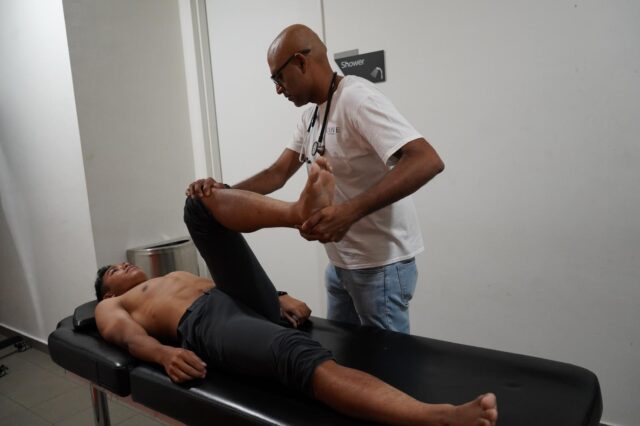
Assessment usually begins with a discussion about symptoms, injury history and activities that aggravate the pain. A physical examination then considers swelling, movement, strength, stability and functional tasks such as walking, squatting or stepping.

A clinical assessment may include:

  • Medical history
  • Pain-location mapping
  • Knee range of motion
  • Swelling assessment
  • Ligament testing
  • Meniscus-related tests
  • Muscle-strength assessment
  • Hip and ankle examination
  • Walking or running assessment
  • Squat and step testing
  • Sports and occupational history
  • Review of previous imaging

The findings help determine whether imaging or further investigation may be useful.

Do I need an X-ray, MRI or ultrasound scan?

Not everyone with knee pain requires imaging. The choice depends on the suspected condition, examination findings and whether the result is likely to influence management. Many common knee presentations can begin with clinical assessment and non-surgical care.

X-ray

An X-ray may help assess fractures, bone alignment and joint changes such as osteoarthritis.

MRI

MRI may provide information about the menisci, ligaments, cartilage, tendons, bones and deeper soft tissues.

Musculoskeletal ultrasound

Ultrasound can assess selected tendons, bursae, cysts and superficial structures in real time. However, it cannot show every structure inside the knee as clearly as MRI.

CT scan

CT may be considered when more detailed assessment of the bones is required.

The most appropriate scan depends on the clinical question rather than pain severity alone.

What treatment options are available for knee pain?

Management depends on the diagnosis, symptom duration, functional limitations and activity goals. Many knee conditions begin with education, temporary activity modification and rehabilitation aimed at improving movement, strength and tolerance for daily or sporting activities.

Management options may include:

  • Education about the condition
  • Adjustment of aggravating activities
  • Mobility exercises
  • Progressive strengthening
  • Hip and thigh conditioning
  • Balance and movement-control training
  • Walking or running review
  • Sport-specific rehabilitation
  • Return-to-sport planning
  • Medication following medical advice
  • Sports ultrasound where appropriate
  • Selected image-guided procedures
  • Surgical review where clinically indicated

Depending on the individual’s condition and clinical assessment, certain procedures may be considered as part of a broader management plan.

Can injections and ultrasound-guided procedures help knee pain?

Yes. Many knee conditions respond well to non-surgical, image-guided injections and procedures. Platelet-rich plasma (PRP) in particular is a versatile option used across a wide range of knee problems, and treatments are delivered under ultrasound guidance for accuracy. The right choice depends on the diagnosis.

Depending on the condition, options may include:

Platelet-rich plasma (PRP) — the most versatile option: PRP uses your own growth factors to support healing and is used across a wide range of knee problems, including knee osteoarthritis, meniscus tears, patellar and quadriceps tendinopathy, and tendon tears.

Corticosteroid (steroid) injection — settles an acute inflammatory flare or synovitis and can create a window to progress rehabilitation. The effect can be temporary, so it is used selectively.

Hyaluronic acid (HA) — a lubricating gel injected into the knee joint that may ease pain and improve movement, and is commonly used for knee osteoarthritis.

High-volume injection — for stubborn tendinopathy, such as patellar tendinopathy, a larger volume of fluid is injected around the tendon under ultrasound to help break down the abnormal blood vessels and nerves that drive pain.

Tenex (ultrasound-guided percutaneous tenotomy) — removes degenerated or calcified tendon tissue through a small probe, and may help chronic tendinopathy or tendon calcification around the knee.

These treatments are delivered under ultrasound or image guidance for accuracy and are most effective as part of a broader plan that includes rehabilitation. The right choice depends on the diagnosis, and the potential benefits and limitations should be discussed beforehand.

An injection should not replace assessment of the underlying condition.

What exercises may help knee pain?

Exercises may help improve knee movement, muscle strength and tolerance for walking, stairs or sport. However, there is no single exercise programme for every type of knee pain. Selection should reflect the diagnosis, symptoms, current strength and functional goals.

A rehabilitation programme may include:

  • Knee mobility exercises
  • Quadriceps strengthening
  • Hamstring conditioning
  • Hip and gluteal strengthening
  • Calf exercises
  • Balance training
  • Step and squat progression
  • Walking or running progression
  • Jumping and landing practice
  • Sport-specific movements

Exercise load should increase gradually. A repeated rise in swelling, locking, instability or loss of function may require reassessment.

What activities may make knee pain worse?

Activities that increase joint load, impact or repeated bending may aggravate knee pain. However, the trigger varies according to the condition, so activity modification should address the relevant movement rather than require complete rest.

Common triggers include:

  • Running
  • Jumping
  • Deep squatting
  • Lunges
  • Stair climbing
  • Kneeling
  • Pivoting
  • Hiking downhill
  • Heavy lifting
  • Sudden changes in training volume
  • Prolonged sitting in some kneecap-related conditions

Modification may involve reducing speed, depth, resistance, distance or frequency while maintaining comfortable movement.

Can knee pain improve without surgery?

Many people with knee pain begin with non-surgical management and may improve through rehabilitation, activity planning and gradual return to function. Surgery is considered only for selected injuries and joint conditions where symptoms, examination findings and functional limitations support that option.

Regular review may help monitor:

  • Pain and swelling
  • Knee movement
  • Strength
  • Stability
  • Walking and stair function
  • Sporting capacity
  • Response to rehabilitation

Persistent pain does not automatically mean surgery is required.

How long does knee pain usually last?

The recovery period depends on the diagnosis, severity, duration of symptoms and activity demands. Mild soft-tissue irritation may settle over several weeks, while ligament, meniscus, tendon or joint conditions may require a longer period of rehabilitation and review.

Recovery may also depend on:

  • Previous injuries
  • Training load
  • Overall health
  • Muscle strength
  • Swelling
  • Work demands
  • Sporting goals
  • Whether the condition is acute or long-standing

A gradual improvement in function can be as important as changes in pain intensity.

When should I seek medical assessment?

Seek assessment when knee pain persists, repeatedly returns or affects walking, work, exercise or sleep. Prompt review may be required after significant trauma, when the knee locks, becomes markedly swollen or cannot support body weight.

Consider assessment if:

  • Pain lasts several weeks
  • Swelling persists or repeatedly returns
  • The knee gives way
  • The knee becomes locked
  • Movement becomes restricted
  • Walking becomes difficult
  • Symptoms follow a twisting injury or fall
  • Pain regularly disturbs sleep
  • Self-management has not helped

Urgent medical attention may be appropriate if the knee appears deformed, becomes hot and red with fever, cannot bear weight, or develops rapid and severe swelling.

Assessment at Triaxis Sports & Joint Clinic

Triaxis Sports & Joint Clinic provides assessment for knee pain, lower-limb injuries, sports-related conditions and other musculoskeletal concerns.

Clinical assessment focuses on understanding symptom location, knee movement, swelling, strength, stability, activity demands and medical history. Depending on the findings, assessment may include musculoskeletal examination, functional movement analysis, neurological screening where appropriate, sports ultrasound and review of previous imaging.

Patient education and shared decision-making form an important part of the consultation. Therefore, individuals can better understand the possible cause of their symptoms, whether further investigations may help and which management options may be appropriate following clinical evaluation.

Frequently Asked Questions About Knee Pain

Why does my knee hurt without an injury?

Knee pain may develop gradually because of tendon loading, kneecap-related symptoms, joint changes, repetitive activity or reduced movement and strength. A clear injury is not always present, particularly in overuse conditions or osteoarthritis.

Is knee clicking normal?

Painless clicking can occur during normal movement and does not always indicate damage. However, painful clicking, swelling, locking or repeated instability may require clinical assessment.

Should I rest when my knee hurts?

A short reduction in aggravating activity may help, but complete rest is not always necessary. Maintaining comfortable movement and gradually adjusting load may support function, depending on the condition.

Can knee pain come from my hip or back?

Yes. Hip, spine and nerve conditions can occasionally refer pain towards the knee. Assessment may include nearby regions when the local knee findings do not fully explain the symptoms.

Is walking good for knee pain?

Walking may be suitable for many knee conditions when distance and pace match current tolerance. Severe pain, limping or increasing swelling may mean the activity requires adjustment.

Does knee osteoarthritis always get worse?

Not everyone experiences the same progression. Symptoms may vary over time, and exercise, education and other management options may help maintain function. Imaging changes do not always match the level of pain.

Do I need surgery for a meniscus injury?

Not every meniscus injury requires surgery. The decision depends on the type of injury, locking, stability, symptoms, activity goals and response to non-surgical management.

Can I continue exercising with knee pain?

Many people can continue exercising after modifying activities that repeatedly increase pain or swelling. Exercise type and intensity should reflect the diagnosis, movement findings and current capacity.

About the Author

Dr Dinesh Sirisena is a Consultant in Sports, Exercise and Musculoskeletal Medicine. His clinical work includes the assessment and non-surgical management of sports injuries, joint conditions and musculoskeletal pain.

Medical Disclaimer

This page provides general educational information and does not replace an individual medical consultation. Knee pain can have different causes, and suitable investigations or management options depend on each person’s symptoms, injury history and clinical assessment.

Leave a Reply

Your email address will not be published. Required fields are marked *